
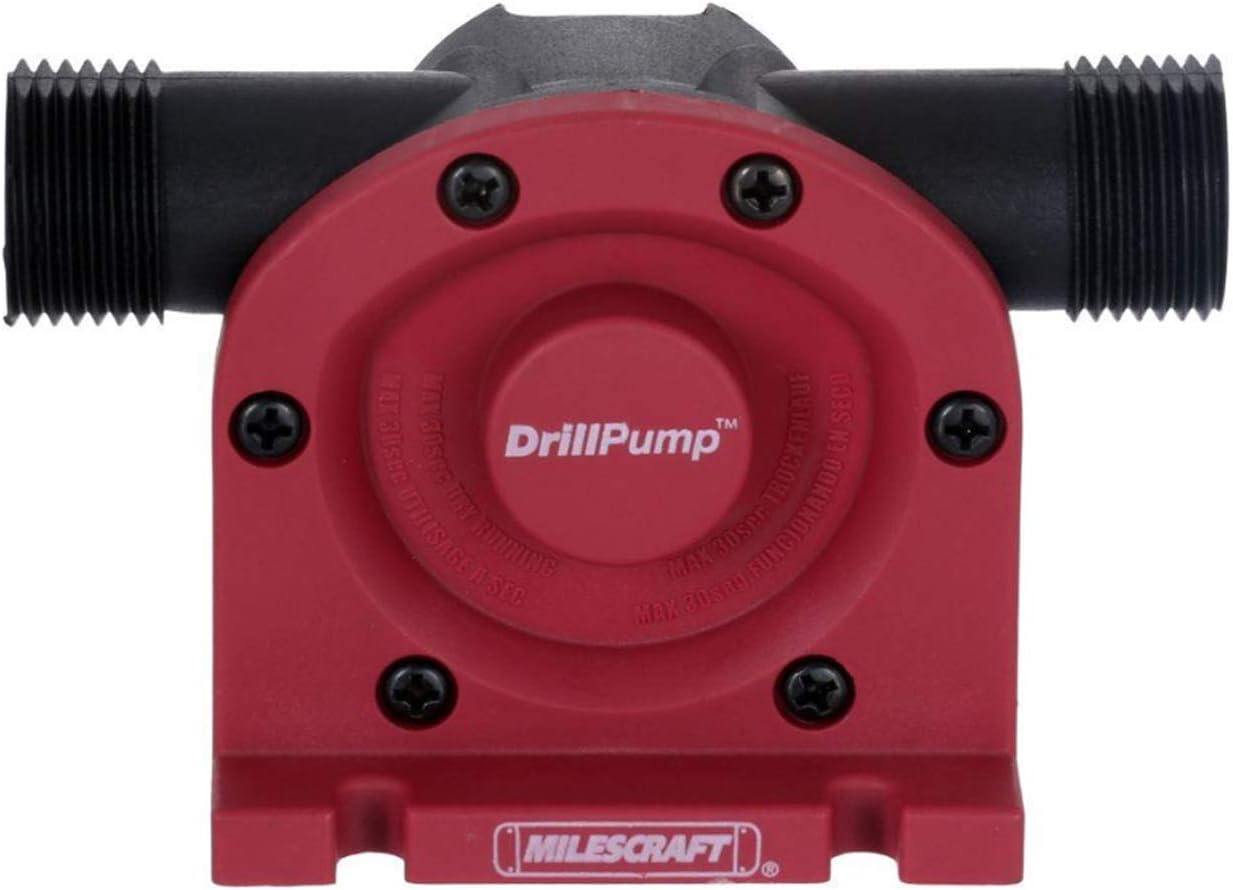
Milescraft 1314 DrillPump750 – Self Priming Water Pump Attachment for Drills – Water Transfer Pump – Uses Common Garden Hose – 750 Gallons per Hour
Original price was: $16.99.$15.95Current price is: $15.95.




Price: $16.99 - $15.95
(as of Sep 29, 2025 08:36:09 UTC – Details)
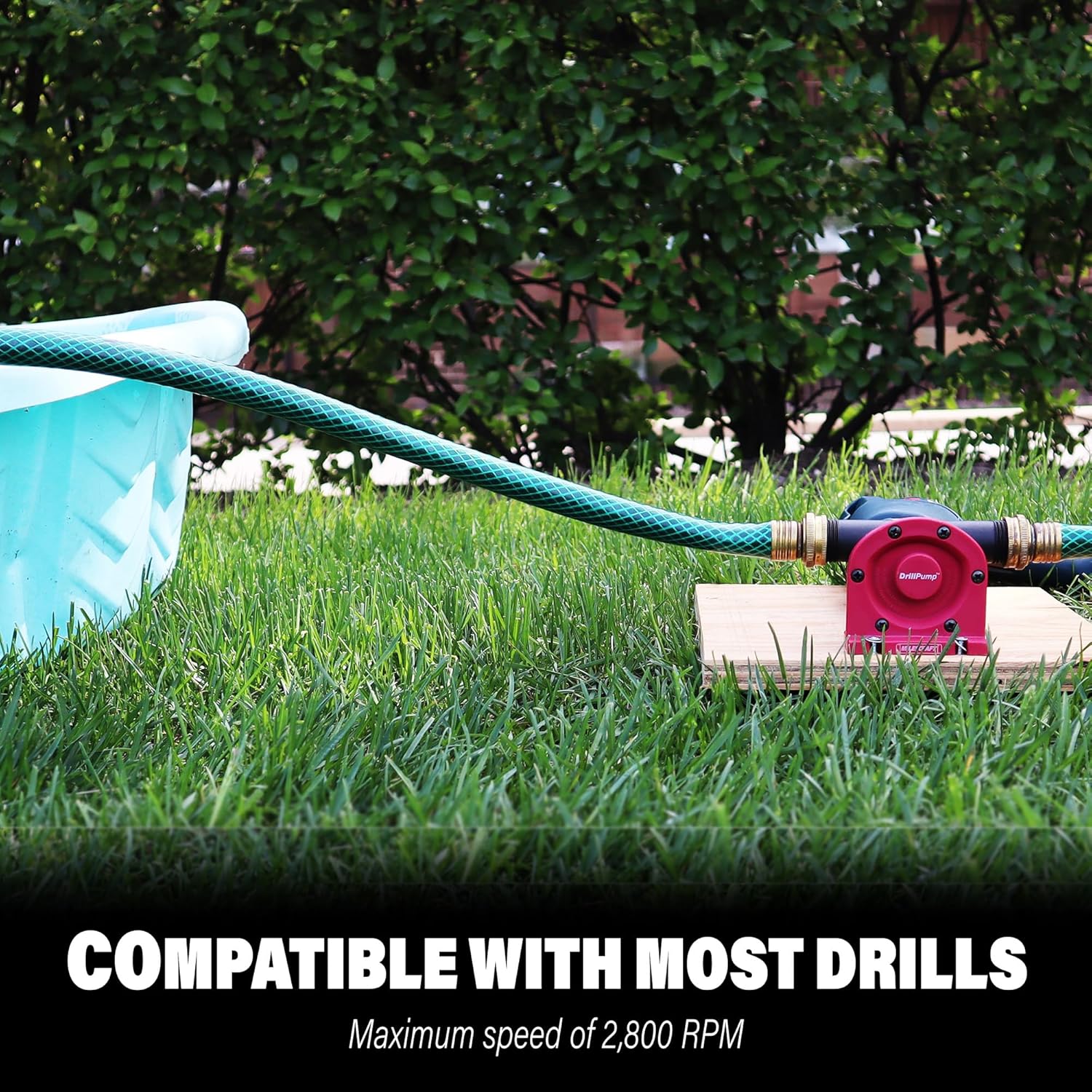
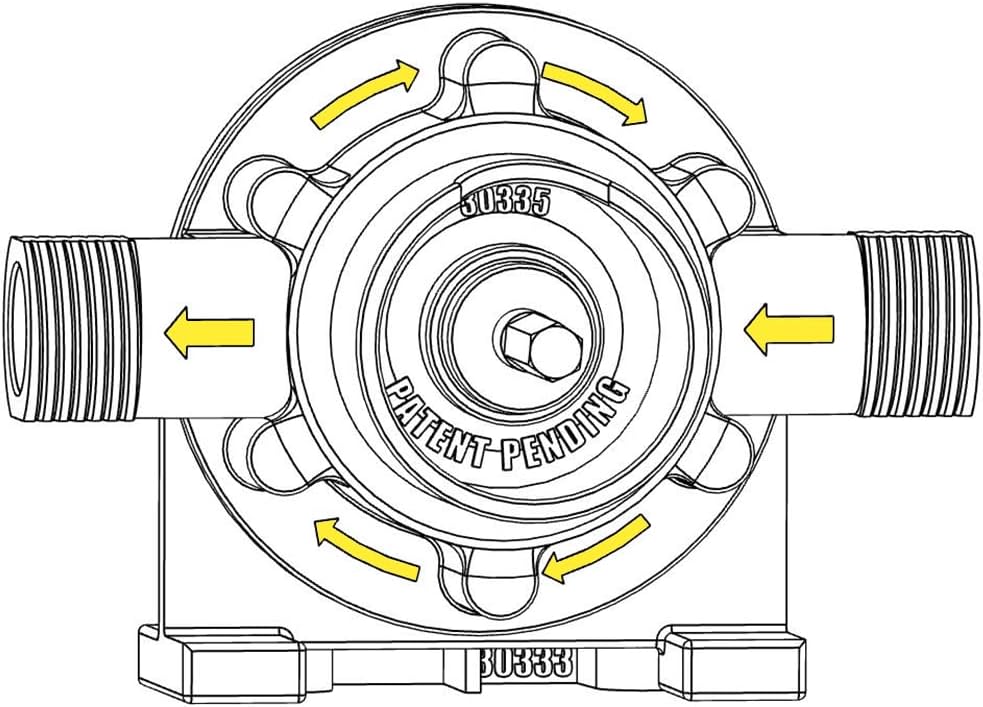
The DrillPump750 is designed to work with most electrical drills with a maximum speed of 2, 800 RPM. This pump is ideal for draining small ponds, fish tanks, small pools or even a flooded basement. The hose connection is 3/4” and uses any standard garden hose. The unit pumps up to 750 gallons per hour and is self-priming up to 12 feet. The 3/8” shank on this unit fits all common chucks for most drills. It is recommended to use silicone grease. To apply, unscrew the side and put a bit of grease on the housing where the rubber fan blades touch, then reassemble. When using, the drill should be set to run forward, turning the pump in a clockwise direction.
SELF PRIMING: Pumps up to 750 gallons per hour
USABILITY IN MIND: 3/4″ hose connection, for use with standard garden hose
UNIVERSAL COMPATIBILITY: 3/8” shank on this unit fits all common chucks
Not to be used with potable water
Drill Pump will not turn by hand, it must be chucked to the drill
Note: After every use apply a small amount of silicone grease. To apply, remove the black housing screws and cover, and put a bit of grease on the housing where the rubber fan blades touch, then reassemble. Do not use spray lubricants.
Customers say
Customers find the water pump works well, with one mentioning it ran non-stop for an hour without issues, and they appreciate its ease of use, making projects quick and easy. The pump transfers water effectively, and while some consider it a decent low-cost option, others say it’s not worth the money. Customers report durability issues, with the pump melting during use and breaking within minutes, and build quality concerns about the shaft not turning properly.
10 reviews for Milescraft 1314 DrillPump750 – Self Priming Water Pump Attachment for Drills – Water Transfer Pump – Uses Common Garden Hose – 750 Gallons per Hour
Add a review
Related Products


Original price was: $16.99.$15.95Current price is: $15.95.

JDCynical –
Does the job, just remember to check a few things first!
I was on the fence between four and five stars, but sided on five as the pump did what it claimed to do and did it well, but I also checked a thing or two before putting it into use, which is where the potential star loss comes in. But since the listing does make a passing mention of it…This is a simple pump design, one that has been in use for centuries, in many different applications and various forms. It’s actually not far off from how some oil pumps work in automobiles, or the motor in air tools. In this case, it’s what is called an unbalanced vane pump. Go look it up if you want to know how it works. In this design, the rotor is a stiff rubber and the veins bend over when they reach the small side of the chamber. This also makes it non-directional in it’s flow, just move it in a given direction slowly a bit to give the veins time to bend in the correct direction before ‘giving it the beans’ (and make sure it’s greased first, more on this below). Just remember the flow is going to be opposite of the direction the drill spins when looking at it from ‘behind’ the drill.This is driven by a plastic cog attached to the drive shaft that has ‘teeth’ cut into in that match a small hole in the middle of the main rotor. If the rotor ever got jammed, you would want this part to give out and let the shaft spin free, not the drill you are holding on to.The design is better than most I have seen, with the body using screws to hold it together. This makes it able to be repaired if the rotor ever fails, and future maintenance is able to be easily performed. The front plate (red part) has a gasket to seal it, and a metal plate sandwiches the rotor to the main body behind the front plate. Don’t be afraid to open it up, there isn’t anything that is spring loaded inside, and it is easy to disassemble and reassemble, just mind that you don’t loose the screws or the one shaft guide piece that sits on top of the plate.And that leads into what the listing should put more importance on and the one caveat I found, grease. When I opened mine up, I found what I would consider a very inadequate amount of grease, and it was the generic beige stuff. I immediately greased it with some silicon based stuff I had (*not* spray!), covering the sides of the rotor, the gasket and the shaft where it rides on the housing.I could see this pump overheating and potentially ‘smoking’ if it was used long enough at speed with the very small amount of grease it arrived with. But in my experience once I greased with what I would consider an OK amount, it worked very well and self primed (the inlet hose was about 8 feet long and the pump was above the water source by a foot or so).Time will tell how well the rubber rotor holds up, but at this time I’m pretty confident that it will last. I would only suggest that one ‘spins’ it every so often to keep the rotor veins from getting ‘stuck’ in the bent over direction.
J.J –
Awesome for sanitizing an RV water system.
Worked perfectly and has a lot of flow. Drained a 5 gallon bucket in less than 2 minutes using an electric plug in drill. I mounted it to a 2 x 4 since they recommend not holding it in your hand. My goal was to use it to get the bleach solution into my RV fresh water tank easily and it worked great for that. I even used it to get the solution in from the city water connection to make sure all the lines were sanitized properly. It pumped from the bucket through to all the faucets with very good pressure. This little pump made the job easy. I highly recommend this for short duration transfer applications.
Mr QikFix –
I usually hate “drill pumps”, but not this one…
The Milescraft 750 is a good little pump for moving significant amounts of water. It’s advertised as a “drill pump” because it is intended to be attached to the chuck of an electric drill for its power source. As others have mentioned, you can pretty much forget using a cordless drill, unless you’ve got a very small pumping task. A corded (plug-in) drill is a better choice, and a 1/2″ size will do the job better than a 3/8″ one, due to the greater power it has.In my application, I coupled it to a 1/2 HP capacitor-start ac motor, because I wanted a relatively compact and self-contained plug-in pump unit for cleaning out my small ornamental pond, as well as other general purpose water transfer tasks.The rubber vanes on the impeller inside this pump have a tight fit inside the housing as they rotate, which makes the pump very effective but also requires a lot of torque to get moving from a standstill. The manufacturer applies a thick grease inside the pump to help reduce the rotating force required, and also recommends applying more of it (or a small amount of light oil like mineral or cooking oil) before each use of the pump. Obviously, oil and grease would not be desirable floating on the surface of my ornamental pond, so I pumped a bucket full of a Simple Green and water mixture through it before using it for the pond.In an application where the pump inlet does not have water directly applied to it before startup, such as a vertical lift and/or horizontal run between the pump and the water source, the length of the inlet hose should not be more than a few feet so the water doesn’t have to travel very far to reach the pump, and can get there in no more than several seconds. This type of pump relies on the fluid being moved as a lubricant for the pump itself. Since it consists of rubber vanes rotating inside a plastic housing, you can understand why others (who obviously ran it dry too long) mentioned that it didn’t work and smoke came out of it!Water that contains any type of hard or abrasive particles should be avoided, as well as any debris that could get trapped between the rotating vanes. I piped a standard residential water filter housing ahead of the intake port of mine, to collect the algae, plant particles, etc. and prevent them from entering the pump.One error in the specifications for the pump (although not a serious one) is that the shaft diameter is listed as being 3/8″. It is actually only 5/16″. If you’re driving it with a coupling like I did, the size is definitely important to know accurately when obtaining the coupling hub for the pump side. Also, a urethane spider will handle the torque much better than a standard rubber one.All in all, as long as you operate it within the limits of its design, I don’t think you can beat the usefulness and performance of this pump for the price.I’m adding an update, and reducing the rating to four stars…when I took the pump out of storage to use it the first time in 2022, I didn’t follow my own advice about making sure to prime it. I just hooked a four foot inlet hose to it and dropped it in the water, then turned on the motor. I waited a only a few seconds for the water to come out of the discharge hose, but that never happened. Although the pump shaft was spinning, I discovered that the impeller was not moving. Upon disassembling the pump, I found the teeth of the plastic driving hub on the shaft were totally worn off, and the mating teeth inside the rubber impeller were also destroyed (see the second photo). Since the pump sat for six months without use and was bone dry, the impeller probably got slightly seized in the housing. The manufacturer’s recommendation to apply a little mineral or cooking oil inside both ports before each use of the pump would definitely apply to the first use after extended storage, and it’s my fault for not taking the time to do that. As a result, my pump is ready for the trash can.I still think this model is useful in the right application. I won’t be buying another one, because it’s a little too tedious for me to make sure it is cared for correctly, and that’s the only way to be sure that it will function when you need it.
RevGregory –
This is a waste of time and money if your job is more than a teaspoon of water.
This is just a rubber impeller. It’s rubber fins spinning inside a rubber ring. Guess what happens when your pump is going for more than a few seconds while it’s draining a long line and the liquid hasn’t reached the rubber fins yet? That’s right…it gets hot and starts melting the rubber. Then, it starts smoking. Then, your drill stops being able to turn the melted rubber fins inside the rubber ring that makes up what they’re calling a “pump” and it starts dragging down your drill’s motor. So, if you’re planning on using this to pump out anything more than a cup of water, don’t waste your money.
James Rau –
works good
Bought this to transfer water from a drum to my camper fresh water tank. It pumps faster than I thought it would.
Michael Livsey –
I bought this pump to serve one purpose: drain my waterbed. It’s very simple to use. You attach a short hose to the input side, a longer one to the output, and connect a drill. It probably works best with a variable drill that can be locked into position once it’s running. Since the pump parts are all plastic, I wouldn’t run it unattended as the drill connection heats up. I just used it for water, and it worked great. I pumped 180 gallons out of a waterbed without any issues.
Anton –
quality top but need powerfull drill
Jannik Thomas –
Tut genau was es soll, starke Pumpe mit viel Durchfluss.Habe sie benutzt um die Heizung meines Autos zu spühlen, damit kam sie super klar. Trocken laufen sollte sie allerdings nicht, da geht sie dann vermutlich schnell kaputt.
José Barbosa Jr –
Funciona bem, conforme recomendado apliquei vaselina depois de cada operação, porém após 12 vezes que utilizei a bomba a engrenagem de borracha desgastou e agora ela gira em falso e não puxa mais água.Eu utilizava para trocar a água do aquário.
Elizondo –
Esta bomba para uso con taladro ofrece una excelente relación calidad-precio. Su diseño es simple pero funcional, permitiendo el trasvase de lÃquidos de manera eficiente sin necesidad de equipos costosos.La instalación y uso son muy sencillos, solo se acopla al taladro y comienza a funcionar sin complicaciones. Los materiales son adecuados para su propósito y, aunque no es una bomba de alto rendimiento, cumple bien con tareas domésticas o de bricolaje.En general, una opción práctica y accesible para quienes buscan una solución sencilla para mover lÃquidos con la ayuda de un taladro.