Ever felt such as you want a decoder to know the jumble of phrases in your skincare labels? Components like Phenoxyethanol and Ethylhexylglycerin can depart us scratching our heads.
Even the elements we will perceive like “perfume” may very well be a blanket label to cover as much as 3,000 completely different, probably dangerous chemical substances!
However concern not! We’re right here to make clear the thriller and aid you make knowledgeable selections about what goes in your pores and skin.
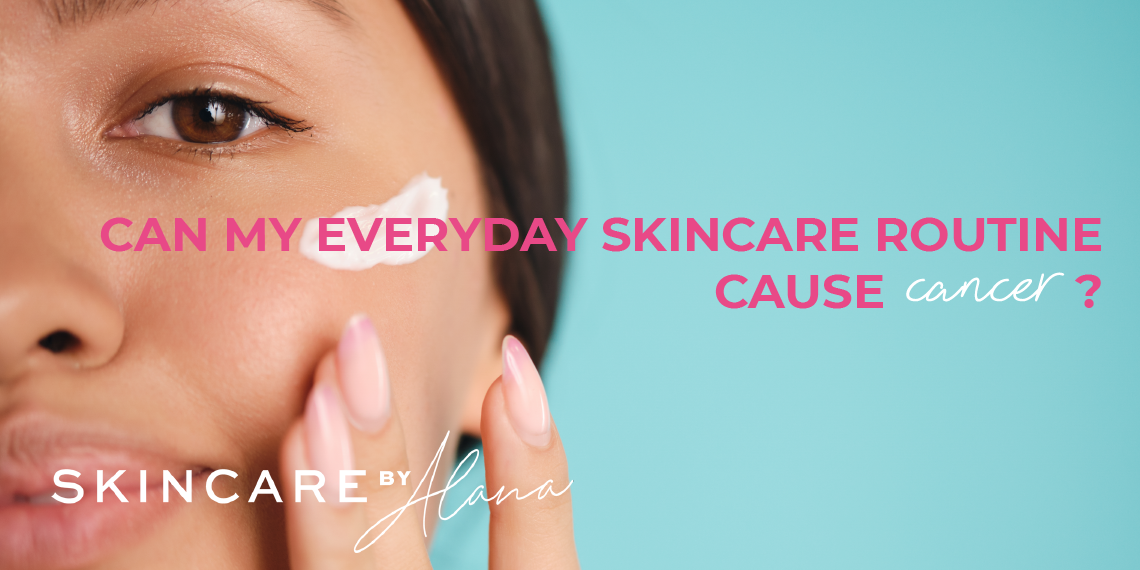
Inside the prolonged lists of foreign-sounding elements, it’s no surprise that many are questioning 1) what’s going on and into the pores and skin and a couple of) what are the long run penalties? Might they be most cancers inflicting?
As articles unfold, x-listing elements like aluminum in deodorant and different widespread skincare merchandise, it’s a good query and the solutions depart loads within the grey space.
Scientific testing can solely go up to now and the long run penalties are arduous to hint again.
Let’s tackle a elementary facet: amount issues. The focus of an ingredient in your product not solely influences its efficacy but additionally determines its security profile. How a lot of an ingredient is in your product issues – it could have an effect on each how effectively it really works and whether or not it’s secure for you!
Why the Confusion?
Now, onto the massive query: are these elements really dangerous? It’s like a detective story, with some suspects clear as day and others hiding within the shadows.
Navigating the maze of skincare regulation can depart anybody feeling misplaced. Within the U.S., the FDA oversees each cosmetics and medicines, however the testing course of might be complicated.
Earlier than a product hits the cabinets, it undergoes varied checks to gauge its quick and long-term results. Nevertheless, these trials might not absolutely mimic real-life utilization, as they typically depend on remoted elements and excessive concentrations.
Brief-term research might catch fast reactions like irritation, however they typically miss the subtler, long-term dangers, like most cancers. Detecting cancer-causing brokers requires intensive, years-long research involving various individuals and contemplating varied environmental elements.
With numerous merchandise hitting the market day by day, pinpointing particular cancer-causing culprits turns into more and more difficult. Regardless of the FDA’s restricted authority in mandating testing, they’ll intervene if a product is deemed unsafe primarily based on out there proof.
In line with the American Most cancers Society, most consultants consider that the substances which have been confirmed to trigger most cancers in animals might have the potential to trigger cancers in people and must be handled with warning. Earlier than a product can go to market, it have to be examined for brief and long run results, whether or not it’s examined on animals, people, each, or neither.
Here is the inside track on potential and confirmed carcinogens lurking inside mainstream skincare merchandise, together with methods to keep away from them.
1) DEA (diethanolamine)
DEA’s, particularly Cocamide DEA & Lauramide DEA, are an additive used to make skincare merchandise extra creamy or sudsy.
Whereas these compounds could appear innocuous, publicity to hefty doses of DEA-related elements, like monoethanolamine and triethanolamine, has been linked to liver cancers in rodent research. So, it is best to steer clear.
You may typically discover DEA’s loitering in your soaps and cleansers, however they’re sneaky little devils, additionally popping up in shaving lotions, foundations, lotions, and sunscreens. And that is not all – preserve a pointy eye out for his or her buddies, TEA and MEA, lurking in family cleansing merchandise, mascara, and eyeshadows too.
2) PEGs A.Okay.A. 1,4-dioxane
Let’s delve into the world of PEGs – Polyethylene Glycols, to be precise. These sneaky compounds won’t at all times flaunt their presence on ingredient labels, however they’re lurking in some skincare merchandise, pulling off quite a lot of duties like thickening, thinning, foaming, and locking in moisture.
However that is the catch: throughout the manufacturing strategy of sure skincare elements, a byproduct referred to as 1,4-dioxane (aka PEG) can rear its troublesome head. Regardless of producers taking precautions, hint quantities of this compound typically stays.
Now, this is probably the most alarming half: 1,4-dioxane isn’t any good friend to our furry companions, and is assessed as a recognized animal carcinogen. And whereas it hasn’t acquired a heat welcome from people both, the U.S. Environmental Safety Company labels it as a possible human carcinogen.
You may typically discover this sneaky compound in foaming cleansers, physique washes, and choose shampoos and conditioners. Because it would not flaunt its title on the label, the FDA advises protecting an eye fixed out for elements sporting the aliases PEG, Polyethylene, Polyethylene glycol, Polyoxyethylene, or any with “-eth-” or “-oxynol-” within the title.
3) Formaldehyde-releasing preservatives
Let’s discuss formaldehyde-releasing preservatives. You are most likely not going to bump into straight-up formaldehyde in your skincare stash, however these sneaky compounds are value keeping track of.
You see, they don’t seem to be simply lurking in your skincare merchandise; they’re additionally cozying up in plastics, cleaners, resins – principally, belongings you’d slightly not smear in your face.
What is the massive deal? Effectively, these preservatives slowly unleash formaldehyde, a infamous human carcinogen, into your pores and skin, and so they’ve even been related to leukemia. Yikes!
So, the place may you discover these troublemakers? Except for merchandise beneath your kitchen sink, preserve a lookout in your physique washes and soaps, significantly for elements like DMDM hydantoin, diazolidinyl urea, imidazolidinyl urea, methenamine, quaternium-15, and sodium hydroxymethylglycinate – simply to call just a few.
4) Parabens
Parabens are a sizzling subject in skincare. Some say they’re dangerous information, others aren’t so certain. As an esthetician, I consider it is important to take a balanced view. Let’s preserve an open thoughts and discover the info collectively!
Parabens, a well-known title within the realm of skincare preservatives, typically make their look in product formulations, albeit in small quantities.
Whereas their pure counterparts might be present in sure meals, the substitute parabens added to cosmetics and skincare increase eyebrows attributable to their affiliation with particular forms of pores and skin most cancers.
What’s extra, these compounds have been recognized to be infamous endocrine disruptors, mimicking estrogen and probably paving the way in which for breast most cancers. When paired with different estrogenic compounds, parabens might also have a hand within the growth of malignant melanoma, a regarding type of pores and skin most cancers.
You may typically spot parabens nestled inside water-based skincare staples like moisturizers, cleansers, scrubs, in addition to shampoos and conditioners.
With that mentioned, it is essential to acknowledge that some respected manufacturers incorporate parabens and sulphates as preservatives, though in secure portions. Firms like DMK or Environ preserve their preservative ranges under 1% to take care of product stability. These hint quantities of pure parabens and sulphates boast antimicrobial, antibacterial, and antifungal properties, serving as efficient guardians for each customers and merchandise alike.
Here is the factor – whether or not to embrace or keep away from merchandise containing parabens in the end boils down to non-public choice. For these amongst you leaning in the direction of paraben-free formulation, dive into our weblog that includes beloved merchandise which can be actually paraben-free!
5) BHA (butylated hydroxyanisole) and BHT (butylated hydroxytoluene)
BHA (butylated hydroxyanisole) and BHT (butylated hydroxytoluene) – two artificial antioxidants that pull double responsibility as preservatives, extending the shelf lifetime of your favourite merchandise.
And that is not all – except for pores and skin irritation and allergic reactions, research have unearthed that extended publicity to hefty doses of BHT can spell toxicity for mice and rats.
So, based on the American Most cancers Society’s playbook, these compounds wave a serious crimson flag. Within the realm of skincare and cosmetics, you will typically spot them in lipstick, sunscreen, antiperspirants, moisturizer, and extra. They’ve even made their method into the world of meals, taking part in the function of preservatives there too!
6) Benzophenone
Let’s chat about benzophenone – a safeguard towards UV mild typically added to skincare formulations.
However there’s a hidden downside – except for its UV-blocking prowess, benzophenone has a darker aspect. Research counsel it could mess with our endocrine system and, even scarier, might up the chance of assorted cancerous tumors.
And right here is the place it will get difficult – benzophenone would not simply go by one title. You may spot it masquerading as BP#, oxybenzone, sulisobenzone, or sulisobenzone sodium.
So, the place may you discover these problematic components? Preserve a eager eye out in lip balms, sunscreens, and moisturizers.
7) Petrolatum
Petrolatum is a by-product of petroleum jelly generally hailed as a moisturizing marvel.
When meticulously refined, petrolatum poses no risk in any way. It is a skincare superhero, swooping in to rescue parched pores and skin.
However the issue lies right here: if it is not refined correctly, issues take a sinister flip. When petroleum will not be absolutely refined, it could develop into contaminated with polycyclic fragrant hydrocarbons (PAHs) which have been flagged as a possible carcinogen and cancer-causing agent.
Sadly, within the US, it is not unusual to bump into inadequately refined petrolatum in skincare merchandise. Scary stuff, proper?
PAHs are available in many styles and sizes, with some carrying the ominous labels of “possible” or “potential” carcinogens. And let’s not neglect the one which’s earned the doubtful distinction of being a recognized carcinogen.
Consider unrefined petrolatum as a magnet for these carcinogenic PAHs. No thanks, proper?
So, this is the golden rule: keep away from moisturizers sporting petrolatum until the corporate ensures it is undergone the total refinement course of.
Professional tip: preserve an eye fixed out for “white petroleum” on the ingredient checklist – it is a telltale signal that the petrolatum has been refined to perfection and is secure to be used!
8) Sodium laureth sulfate (SLES)
Sodium laureth sulfate (SLES) is one other widespread ingredient in skincare merchandise that is liable for creating that luxurious lather, bubbles, and foam.
Related petrolatum, sodium laureth sulfate also can fall prey to contamination by polycyclic fragrant hydrocarbons (PAHs) – one other group of chemical substances recognized for his or her potential carcinogenic results.
You may typically discover sodium laureth sulfate in facial cleansers and physique soaps.
Closing Ideas
Understanding what goes into your skincare merchandise empowers you to make the perfect selections in your pores and skin’s well being.
Though ingredient labels intention to tell, the reality is that insufficient regulation implies that dangerous substances can slip by undetected, typically masked behind innocuous phrases like “perfume.”
Many of those elements additionally carry further dangers with them corresponding to endocrine disruption and environmental toxicity so it’s vital to be curious in regards to the merchandise we permit to be absorbed into our our bodies.
It is also vital to notice that the toxicity of an ingredient can typically rely on the quantity, which in the end performs a task in its effectiveness and potential hurt.
Whereas this checklist of dangerous elements is just the start, it is a helpful software that can assist you navigate the world of skincare extra confidently. It is simple to really feel overwhelmed by the array of unfamiliar elements, however taking the time to coach your self could make all of the distinction.
Keep in mind, your pores and skin deserves elements that nourish and defend, not ones that pose hidden dangers!
This checklist of carcinogenic elements isn’t a complete information, however slightly a software to make use of when studying in regards to the elements which have develop into part of your skincare ritual.
Should you ever end up puzzled by the elements in your favourite merchandise, give them a fast search or take a look at the Marketing campaign for Protected Chemical compounds for a fast recap.
Collectively, let’s prioritize transparency and wellness in our skincare routines, guaranteeing radiant, wholesome pores and skin for years to return!




![[2025 Upgraded Beard & Body Hair Trimmer for Men [All-in-One] USB-C Fast Charging, Groin & Ball Hair Painless Electric Shaver, Travel Razors, Waterproof Wet/Dry Groomer, Black(Lite)](https://m.media-amazon.com/images/I/71dGiA11mUL._AC_SL1500_.jpg)
![[DearKlairs] Freshly Juiced Vitamin Charging Serum, Korean Skincare, 3-O-Ethyl Ascorbic Acid 10%, Niacinamide, Non-oily texture for Sensitive skin](https://m.media-amazon.com/images/I/614qMlFxyBL._SL1500_.jpg)
![[SKIN&LAB] Vitamin C Serum for Face with Hyaluronic Acid and Niacinamide | Even Skin Tone Serum (1.01 fl oz)](https://m.media-amazon.com/images/I/51QVXuCfi9L._SL1000_.jpg)